

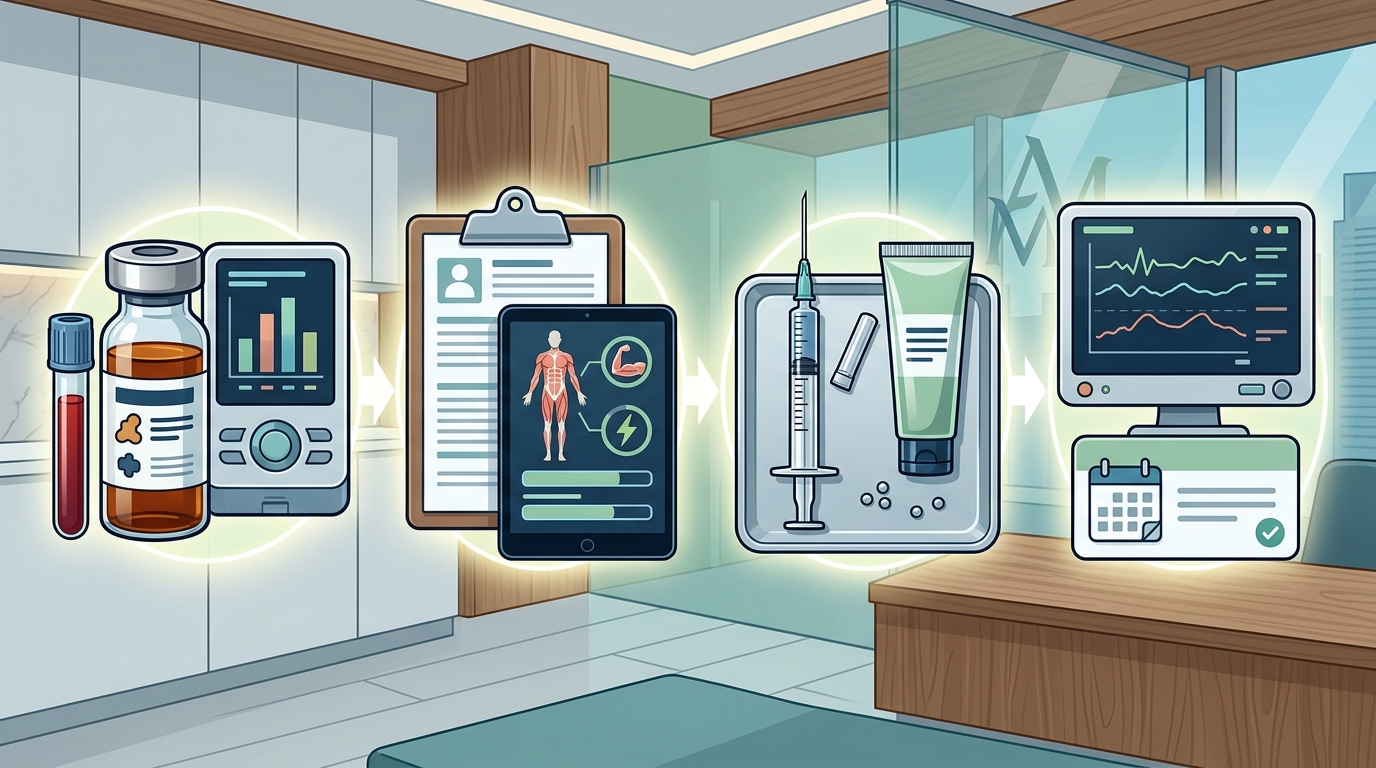
Testosterone replacement therapy (TRT) is a medical protocol that restores low testosterone levels to a normal physiological range. The process typically begins with a comprehensive blood panel and clinical evaluation, followed by a personalized treatment plan involving injections, gels, or pellets. At Alive Miami, our physician-led approach ensures that every step, from initial diagnostics to ongoing monitoring, is supervised by board-certified internal medicine specialists to maximize safety and efficacy. For additional details, review the .
Initial Evaluation and Diagnostics
The first phase of the testosterone replacement process is a rigorous diagnostic assessment. A physician must confirm that low testosterone is the primary cause of symptoms before initiating treatment. This involves a detailed medical history review and a physical examination to rule out other underlying conditions. For additional details, review the Customer Experience.
At Alive Miami, we utilize advanced diagnostic panels to measure total testosterone, free testosterone, and other relevant biomarkers. These blood tests are typically performed in the morning, as testosterone levels naturally peak during this time. The evidence from these labs provides the baseline necessary for a safe and effective treatment plan. For additional details, review the Frequently Asked Questions.
The implication of this step is that treatment is not a one-size-fits-all solution. By establishing a precise baseline, we can tailor the dosage and delivery method to your specific physiological needs, ensuring that the therapy addresses your unique health profile. For additional details, review the About.
Selecting the Right Delivery Method
Injections are the most common method, often administered every one to two weeks. Gels offer a daily application option that provides more stable hormone levels, while pellets are implanted under the skin and last for several months. At Alive Miami, our physicians help you weigh these options based on your lifestyle, preferences, and medical history. according to The benefits and
The choice of delivery method directly impacts your quality of life and adherence to the protocol. For example, a patient who travels frequently might prefer the convenience of a longer-acting injection or pellet, while another might prefer the daily routine of a gel. This personalized selection is a hallmark of our precision medicine approach.
Administration and Dosage Protocols
After selecting a delivery method, the administration phase begins. For injections, patients may receive their first dose in the clinic under physician supervision or be trained on self-injection techniques. Dosage is calculated based on your weight, age, and initial blood work results. according to Startup from School
At Alive Miami, we emphasize safety and proper technique during this phase. Our team provides clear instructions on how to administer injections or apply gels correctly to avoid skin irritation or uneven absorption. The dosage is typically adjusted after the first few weeks based on follow-up blood tests and symptom improvement.
This phase is critical for establishing a consistent routine. Proper administration ensures that hormone levels remain within the target range, which is essential for experiencing the full benefits of TRT, such as increased energy, improved mood, and enhanced muscle mass.
Monitoring and Long-Term Maintenance
Testosterone replacement is a long-term commitment that requires regular monitoring. Follow-up blood tests are scheduled at specific intervals, usually every three to six months, to ensure that hormone levels remain optimal and to check for any potential side effects.
At Alive Miami, we conduct regular check-ins to assess your progress and make any necessary adjustments to your dosage. This ongoing monitoring is crucial for maintaining your health and preventing complications such as elevated red blood cell counts or changes in cholesterol levels.
The implication of consistent monitoring is that TRT is a dynamic process, not a static prescription. By staying engaged with your care team, you can ensure that your treatment remains effective and safe over time, supporting your long-term health and vitality goals.
Key Takeaways
- Testosterone replacement therapy is a medical protocol that requires a confirmed diagnosis through blood testing.
- The process begins with a comprehensive evaluation to establish a baseline and rule out other conditions.
- Personalized dosage and administration techniques are critical for safety and efficacy.
- Regular monitoring and follow-up blood tests are essential for long-term maintenance and safety.
- Alive Miami provides physician-led care to ensure a safe and effective TRT experience.
Frequently Asked Questions
How long does the testosterone replacement process take to start?
The initial evaluation and blood testing can be completed in a single visit. Treatment typically begins within a few days to a week after the results are reviewed and a plan is established.
What are the most common delivery methods for TRT?
The most common methods are intramuscular injections, transdermal gels, and subcutaneous pellets. The choice depends on your lifestyle and medical history.
How often do I need to get blood tests during TRT?
Blood tests are usually required every three to six months to monitor hormone levels and check for potential side effects.
Can I self-administer testosterone injections?
Yes, many patients are trained to self-administer injections at home after their first dose is given in the clinic under supervision.
Is TRT a permanent commitment?
TRT is typically a long-term treatment. Stopping the therapy can lead to a return of low testosterone symptoms, so ongoing monitoring is recommended.
Where can I find a physician-led TRT clinic in Miami?
Alive Miami in Brickell offers physician-led testosterone replacement therapy with advanced diagnostics and personalized care.