

What Should I Know About Hormone Pellet Therapy Before Starting Treatment?
Hormone pellet therapy is a long-acting bioidentical hormone delivery method that provides steady levels over months. Before starting, you must understand the lack of high-quality safety data, the irreversible nature of the procedure, and the specific symptoms you are trying to treat. At Alive Miami, we prioritize evidence-based care and comprehensive testing to ensure any hormone intervention is safe and appropriate for your unique biological profile.
Understanding the Mechanism and Delivery
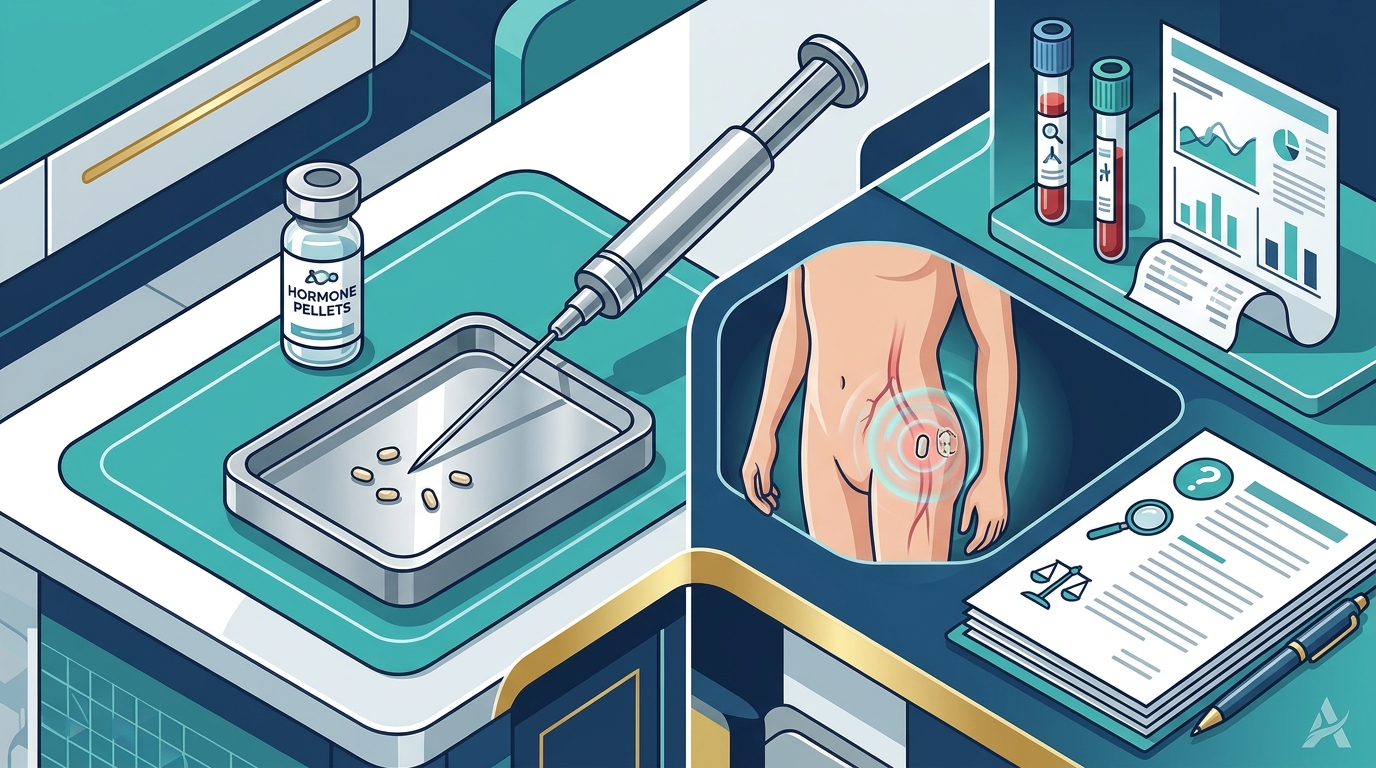
Hormone pellet therapy is a minimally invasive procedure where small, solid pellets of bioidentical hormones are inserted under the skin, typically in the hip or buttock area. Once implanted, the pellets release hormones gradually into the bloodstream over a period of three to six months. This method bypasses the digestive system, which can be beneficial for individuals who experience gastrointestinal issues with oral medications or who struggle with the consistency of daily topical applications. This approach is part of the broader category of compounded bioidentical menopausal hormone therapy.
The steady release mechanism is often cited as a primary benefit, as it avoids the peak-and-trough fluctuations associated with daily pills or patches. However, this same mechanism means that the hormone levels are not easily adjustable once the procedure is performed. If a patient experiences adverse effects, the only way to stop the delivery is to have the pellets surgically removed, which is a more complex process than simply stopping a daily dose.
Safety, Efficacy, and Evidence Gaps
One of the most critical factors to consider is the current state of clinical evidence. The American College of Obstetricians and Gynecologists (ACOG) notes that there is a lack of high-quality data on the safety and efficacy of custom-compounded bioidentical hormone therapy for the management of menopausal symptoms. This includes compounded pellets, which are often prepared by local pharmacies rather than manufactured by large pharmaceutical companies with rigorous FDA oversight.
Because of this evidence gap, patients must be fully informed about the unknowns regarding long-term use. A study published in the National Library of Medicine highlights the importance of informing patients about the lack of evidence on prolonged use of testosterone therapy before starting treatment. At Alive Miami, we emphasize transparency. We do not recommend pellet therapy as a first-line treatment for most patients due to the limited data and the difficulty in titrating doses. Instead, we focus on methods that allow for precise, adjustable dosing based on ongoing lab results.
Symptom Evaluation and Diagnostic Testing
Before considering any hormone replacement therapy, a comprehensive diagnostic evaluation is essential. Hormone imbalances can manifest in various ways, including fatigue, mood changes, sleep disturbances, and changes in body composition. However, these symptoms can also be caused by other medical conditions, such as thyroid disorders, sleep apnea, or metabolic issues. Therefore, a thorough medical history and physical examination are the first steps in the process.
At Alive Miami, we utilize advanced diagnostic testing to establish a baseline. This includes comprehensive blood work to measure hormone levels, as well as body composition scans to assess lean mass and fat distribution. By identifying the root cause of your symptoms, we can determine if hormone therapy is the appropriate intervention. For example, if a patient has low testosterone but also has significant insulin resistance, addressing the metabolic health issue may be more effective than simply adding hormone replacement.
Comparing Pellets to Other Delivery Methods
At Alive Miami, we offer personalized hormone optimization designed to restore balance and improve vitality. We believe that the best delivery method is the one that aligns with your lifestyle, medical history, and specific health goals. For many of our patients, topical or oral bioidentical hormones provide the flexibility needed to achieve optimal results without the commitment of a long-acting implant. We work with you to determine which method is most suitable for your unique needs.
Monitoring and Long-Term Management
Regardless of the delivery method chosen, ongoing monitoring is a critical component of hormone therapy. Regular blood tests are necessary to ensure that hormone levels remain within the desired range and to monitor for any potential side effects. This monitoring allows for timely adjustments to the treatment plan, ensuring that you continue to benefit from the therapy while minimizing risks.
At Alive Miami, we provide ongoing medical guidance and support throughout your treatment journey. Our board-certified physicians review your lab results and adjust your protocol as needed. We also focus on holistic health, incorporating lifestyle modifications, nutrition, and other wellness therapies to support overall well-being. By taking a comprehensive approach, we help you achieve sustainable results and improve your quality of life.
Key Takeaways
- Hormone pellet therapy is a long-acting delivery method that releases hormones over several months.
- There is a lack of high-quality data on the safety and efficacy of custom-compounded hormone pellets.
- Comprehensive diagnostic testing is essential before starting any hormone therapy.
- Alternative delivery methods, such as creams and patches, offer more flexibility for dose adjustment.
- Ongoing monitoring and medical supervision are critical for safe and effective hormone optimization.
- At Alive Miami, we prioritize evidence-based care and personalized treatment plans.
Frequently Asked Questions
How long do hormone pellets last?
Hormone pellets typically last between three and six months, depending on the individual's metabolism and the specific hormone being delivered.
Is hormone pellet therapy FDA-approved?
Custom-compounded hormone pellets are not FDA-approved as a single, standardized product. They are prepared by compounding pharmacies and are not subject to the same rigorous testing as FDA-approved pharmaceuticals.
What are the common side effects of hormone pellet therapy?
Common side effects can include injection site reactions, acne, mood changes, and in some cases, excessive hormone levels leading to symptoms like irritability or sleep disturbances.
Can hormone pellets be removed if I experience side effects?
Yes, hormone pellets can be surgically removed if you experience adverse effects, but this is a more complex procedure than simply stopping a daily medication.
How does Alive Miami approach hormone therapy?
At Alive Miami, we use a personalized, evidence-based approach that includes comprehensive testing and ongoing monitoring to ensure safe and effective hormone optimization.
What is the difference between bioidentical and synthetic hormones?
Bioidentical hormones are chemically identical to the hormones produced by the human body, while synthetic hormones are man-made and may have different structures and effects.
Do I need a prescription for hormone pellet therapy?
Yes, hormone pellet therapy requires a prescription from a licensed healthcare provider who can evaluate your medical history and lab results.
Conclusion
Understanding the risks and benefits of hormone pellet therapy is crucial before making a decision. While it offers a long-acting solution, the lack of robust evidence and the difficulty in dose adjustment make it a less ideal first-line treatment for many individuals. At Alive Miami, we are committed to providing safe, evidence-based care that prioritizes your long-term health. We encourage you to schedule a consultation with our board-certified physicians to discuss your symptoms and explore the most appropriate treatment options for your unique needs. Learn more about our hormone optimization services and take the first step toward feeling your best at every stage of life.